Japanese scientists have come up with a clever way to turn worn-out oil wells into clean hydrogen factories. Instead of drilling new sites or building massive plants, they want to reuse what already exists deep underground. It is practical, bold, and very Japanese in its efficiency.
The idea comes from researchers at Kyushu University working with the ENEOS Xplora research center. Their plan targets leftover oil that companies usually abandon because it is too expensive to extract. Rather than writing it off, they turn that oil into fuel, right where it sits.
After an oil field reaches the end of its life, it still holds thick residues trapped in rock pores. These leftovers are usually ignored. The new method treats them as raw material for hydrogen production, without pulling them to the surface.
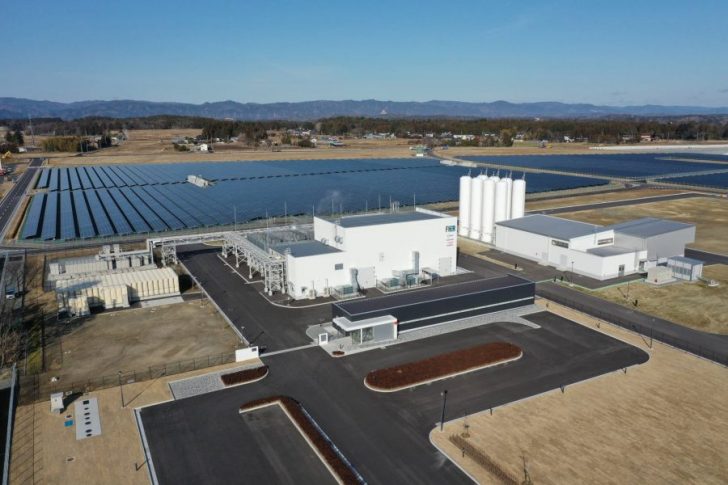
Japan Times / Scientists inject tiny particles made from nickel oxide and calcium hydroxide into the empty reservoir. Then they pump in oxygen.
This starts a controlled burn of the remaining oil, deep underground, not at the surface.
That underground fire does two jobs at once. It heats the reservoir to between 400 and 800 degrees Celsius. It also breaks down the trapped oil into gas. The heat creates the perfect setting for hydrogen-making reactions to kick off.
Nickel oxide boosts the burn and then switches roles. It becomes a catalyst that speeds up steam reforming, a reaction that turns hydrocarbons into hydrogen rich gas. This step is key because it pushes hydrogen output higher without extra energy input.
Calcium hydroxide handles the carbon problem. As carbon dioxide forms, it reacts with the calcium compound and turns into solid calcium carbonate. That rock stays locked inside the reservoir, sealing carbon away instead of letting it escape.
This is why the hydrogen counts as blue hydrogen. The carbon never reaches the air. It stays trapped where the oil once lived, inside stable geological layers that already held hydrocarbons for millions of years.
The Numbers That Made Researchers Pay Attention
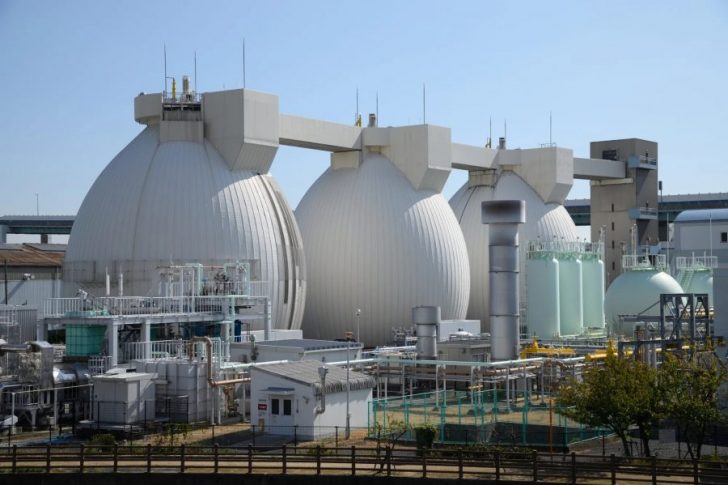
Japan Times / In lab simulations, the results surprised even the scientists. Hydrogen made up 42% of the gas produced. That is a serious number for an early-stage process using waste oil.
The energy conversion rate also stood out. Up to 70% of the original oil’s energy is turned into usable fuel, mainly hydrogen and methane. At 800 degrees Celsius, the reactions stayed stable and efficient.
These numbers matter because hydrogen production often struggles with losses. Here, the heat comes from the oil itself. No giant burners. No outside power source. The reservoir becomes its own reactor.
Carbon capture happens at the same time as fuel production. There is no need for pipelines, compressors, or storage tanks for CO₂. Everything stays underground, cutting cost and risk.
That combination makes the idea attractive for countries with aging oil fields. Instead of sealing them and walking away, they could keep producing energy in a cleaner form.
This Fits Japan’s Energy!
Japan has few natural energy resources and relies heavily on imports. Hydrogen is central to its long-term plan to reach carbon neutrality by 2050. The government wants to use millions of tons of hydrogen each year across power, transport, and industry.
This underground method fits neatly into that plan. It offers domestic hydrogen production without building new facilities or depending fully on imports. It also works alongside green hydrogen rather than competing with it.
Depleted oil fields are stranded assets. They already have wells, monitoring systems, and geological data. Reusing them cuts development time and lowers financial risk.